
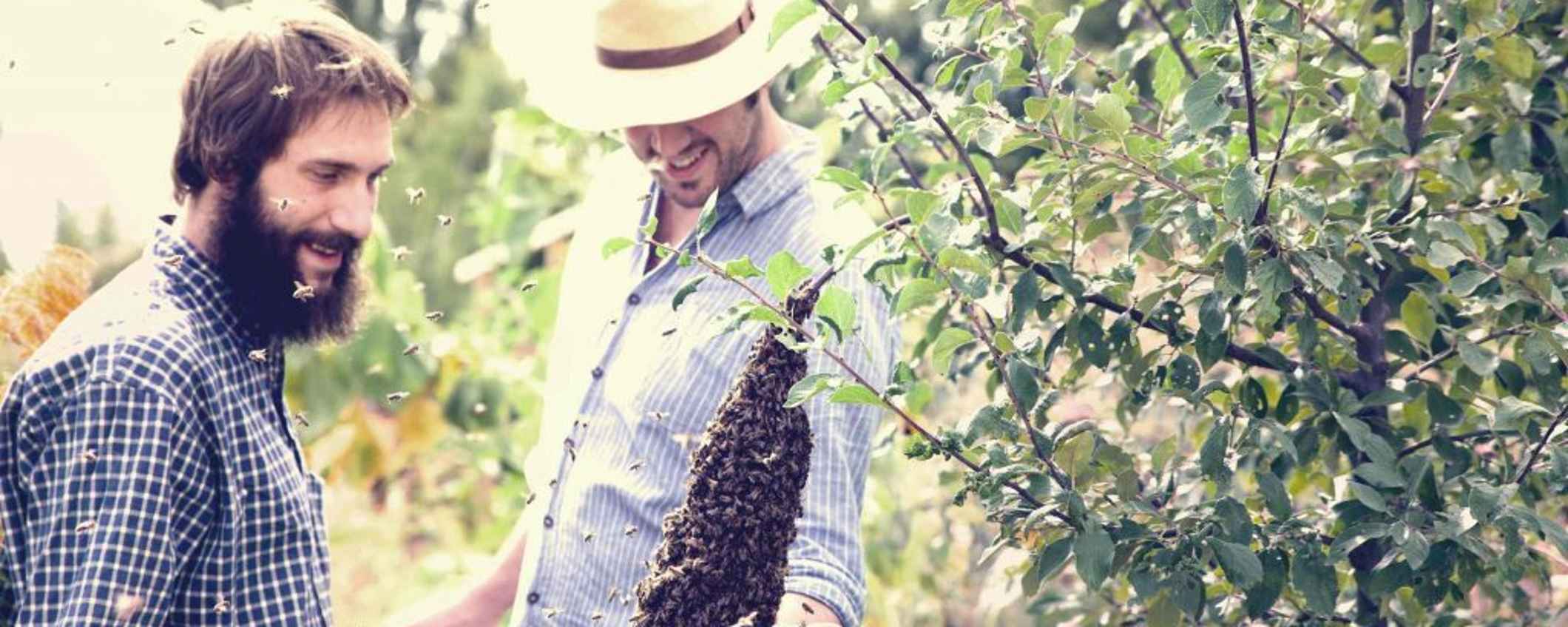
Tobias Miltenberger and David Gerstmeier are fighting these possibly fatal developments. Their Summtgart Institute – based in Stuttgart, Germany – draws attention to the current plight of bees and attempts to protect them. They’re concerned not only with external factors harmful to bees, such as pesticide use, but also with beekeeping conditions, which are a little known problem.
“Beekeeping isn’t ecological by definition”, says Miltenberger. Bees are profitable in the same ways as cows or pigs and are expected to render ever increasing yields as they are. To maximise honey production many beekeepers keep enormous colonies of bees with prefabricated standardised honeycombs, says the 40-year-old agricultural economist. The bees are then prevented from founding new colonies in spring with their queen, among much else. “Their propensity for swarming is suppressed and the insects subjected to stress”, Miltenberger says.
“Nowadays, bees are just producers to many beekeepers”. What used to be an intuitive and personal relationship between keeper and bee has been replaced with a rational economic relationship which isn’t always concerned with the welfare of the bees.
The Summtgart Institute – a conflation between the German word summen (buzz) and Stuttgart, where they’re based – is designed to contribute to the future-proofing of beekeeping, Miltenberger adds. Its two founders want to utilise the fascination many people have for honey bees and the sympathy they feel for these extremely useful insects. Miltenberger and the 26-year-old master beekeeper Gerstmeier offer, for example, seminars for those interested in bees, those wishing to keep bees, and experienced beekeepers wanting to modify their conventional methods by abandoning industrialised beekeeping in favour of more natural swarm beekeeping. Both are keen to further develop this last point. They’re keen to tap into the natural behaviours of colonies and allow their bees to follow their own rhythms and behaviours.
They’re also on the lookout for old beekeeping methods beneficial to the reintroduction of bees. Bees and their produce, as Miltenberger says, played an extremely important role in many cultures and in some cases still do. The profession of beekeeper, or apiarist as they used to be called, once enjoyed a very high social status.
Miltenberger and Gerstmeier have both a theoretical and a practical relationship to bees as they are both professional beekeepers. They emphasise the importance of retention of honey quality and only take 20% of the product from the hive, for example, to ensure the insects have enough for themselves. Pollen and colours are not filtered out of the honey which yields honey that differs season by season. It sometimes tastes of cherry blossoms and at other times of field flowers or woodland plants.
CV
SUMMTGART INSTITUTE
The Summtgart beekeepers have set themselves the goal of being future-oriented. For the beekeepers, Tobias Miltenberger and David Gerstmeier, this means acting ecologically, economically and socially. First and foremost, the beekeeping is most important: that’s why they base thair approach on the natural needs of the bee population and not on a desire for increased yields. This creates high-quality products at a fair price for humans and bees.
The Summtgart beekeepers are Business Customers of Triodos Bank Germany
How Triodos client Summtgart would like to permanently change beekeeping
The bee saviour from Stuttgart
Interview
The disappearance of bees would have grave consequences for our environment and the world’s population. These insects play an important role in our ecosystem, are a link between individual plants, and contribute to biodiversity. We know this, but bees are becoming increasingly threatened with bee mortality now being an issue of public concern. Monocultures in agriculture, poisonous agricultural pesticides and the varroa mite all make life difficult for bees.
Thanks for joining the conversation.
We've sent you an email - click on the link to publish your post.