

A couple of hours’ drive from Gwanda in the south west of Zimbabwe, close to the border with Botswana, I came across an extraordinary sight. A bank of solar panels – 400 in total – which made for a dazzling spectacle under Mashaba’s blazing midday sun. They constitute Zimbabwe’s largest off-grid solar farm and are heralding a new era in solar power for some of Africa’s most marginalised communities.
For Winnie Sebata, 67, a retired school teacher turned budding entrepreneur, energy access has arrived at a perfect time “We really hope this project will change the lives of this community and the lives of people of Zimbabwe. So we are lucky to have been chosen. We are 8km from the border, so hopefully cross-border traffic will open up more business opportunities”. Electrification has given Mr & Mrs Sebata the chance to diversify their retail business, selling meat from local farmers, opening a hairdressers and providing a range of solar powered products to meet growing local demand.
Practical Action is leading a consortium of public and private partners both to deploy the technology in Mashaba and develop a sound business model to establish viable mini grids.
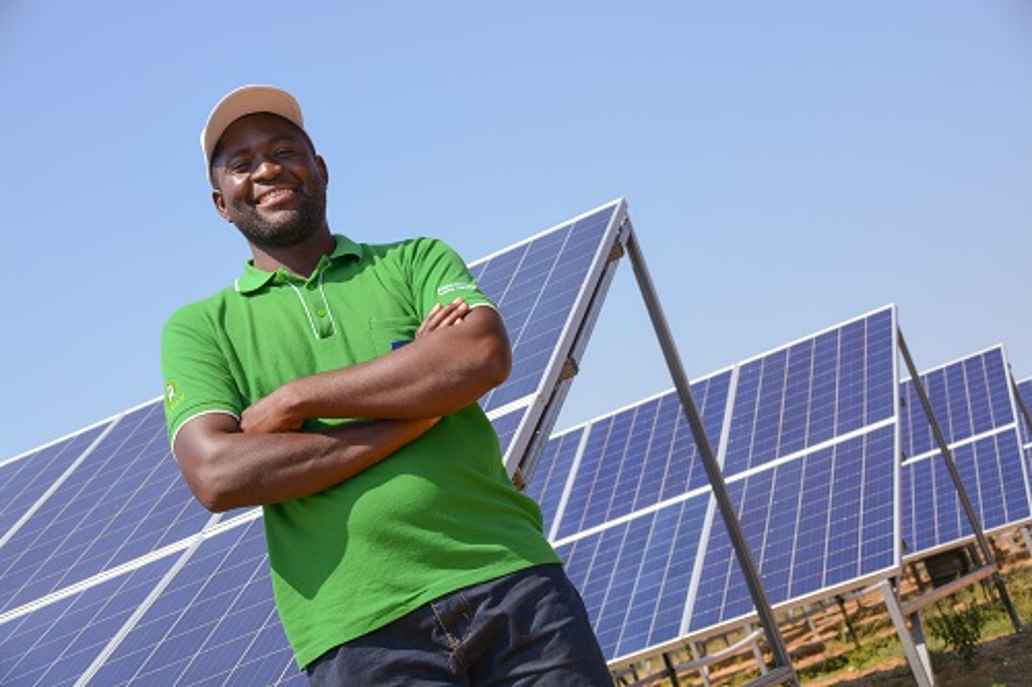
With the majority of up-front investment for the 99kW project being met by the European Union, the four year project to install and bed down the scheme is well under way.Apart from the Sebata’s business, the other early beneficiaries include the health clinic, the primary school, local smallholder farmers and several energy kiosks. By 2019, the grid will be serving more than 10,000 people in the surrounding area.
According to Shepherd Masuka, Practical Action’s Project Technician, the imminent arrival of pre-payment meters to aid the collection of fees will enable users to be charged for their electricity usage, with subsidised rates for the school and the clinic. Reliable revenue will allow for on-going maintenance of the grid with an estimated payback period of between 8-10 years.
The Mashaba scheme is just one of a growing number of such developments. A recent Economist article highlighted the growth of solar power across the developing world with growing demand for energy, the falling price of solar panels (80% in the past five years) and technological improvements in generation and storage contributing to that growth.
Lessons are still being learned about improving the policy environment, providing access to finance across the value chain and protecting consumer’s rights. But certainly for Mr and Mrs Sebata, it looks like their new business venture has a very bright future indeed.
Ian Derbyshire, Corporate Partnership Executive, Practical Action
This video is hosted by Youtube

By playing this video you allow Youtube to track your visit More info
PRACTICAL ACTION
CV
Practical Action is an international development charity which champions sustainable technology to challenge poverty and improve the lives of people worldwide. For more information on Practical Action’s work towards universal access to modern energy services, visit http://www.practicalaction.org/energy
Thanks for joining the conversation.
We've sent you an email - click on the link to publish your post.